South Korean Stock Market Adjustment: Opportunity or Risk?

Aug 28, 2025 By

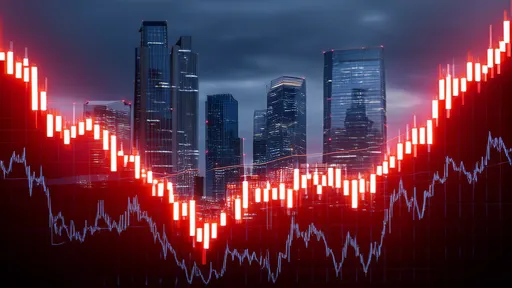
The recent turbulence in South Korea's equity markets has sent ripples through global investment circles, presenting a complex tableau of both promise and peril. As the KOSPI and KOSDAQ indices experience notable adjustments after a prolonged period of growth, international investors find themselves at a crossroads, weighing the potential for substantial returns against the backdrop of heightened volatility and macroeconomic uncertainties.


At the heart of this market recalibration lies a confluence of domestic and international factors. On the domestic front, concerns about corporate governance structures, particularly within the powerful chaebol system, have resurfaced with renewed intensity. The ongoing tension between shareholder rights and family-controlled management continues to create uncertainty about long-term value creation. Simultaneously, South Korea's export-dependent economy faces headwinds from fluctuating global demand, especially in its cornerstone semiconductor and automotive sectors. These internal challenges are compounded by external pressures, including shifting trade dynamics and the persistent strength of the Korean won, which affects the competitiveness of the nation's exports.


The technological sector, which constitutes a significant portion of South Korea's market capitalization, deserves particular attention. Semiconductor giants, often referred to as the "bellwethers" of the Korean economy, are navigating a complex landscape of cyclical demand and intense global competition. The memory chip market, traditionally a stronghold for Korean manufacturers, is experiencing pricing pressures and inventory adjustments that directly impact earnings projections. Meanwhile, the electric vehicle battery industry, another critical growth engine, faces both immense opportunities and formidable challenges as international competitors accelerate their investments and technological advancements.


Market valuations have become a focal point for analysts worldwide. After years of outperformance, Korean equities are undergoing a necessary correction that some argue was long overdue. Price-to-earnings ratios across various sectors are returning to more historical norms, creating potential entry points for value-oriented investors. However, the question remains whether this adjustment represents a temporary dip in an ongoing bull market or the beginning of a more sustained bearish trend. The answer likely lies in how effectively Korean corporations can adapt to the rapidly changing global economic environment.


Foreign investment flows tell a revealing story about international sentiment. While some overseas investors have been net sellers during recent downturns, others view the pullback as a strategic buying opportunity. This divergence in opinion reflects the fundamental ambiguity surrounding Korea's market trajectory. Historical patterns suggest that foreign capital often leads both the entry into and exit from Korean markets, making their movements a crucial indicator for domestic and international observers alike.


The regulatory environment adds another layer of complexity to investment decisions. South Korean authorities have demonstrated a willingness to intervene in markets during periods of extreme volatility, implementing measures to stabilize prices and restore investor confidence. While such interventions can provide short-term relief, they also raise questions about market efficiency and the long-term development of Korea's financial ecosystem. Investors must carefully consider how regulatory actions might impact their positions and strategies.


Currency dynamics further complicate the investment calculus. The Korean won's performance against major currencies, particularly the US dollar, significantly influences returns for foreign investors. A stronger won can erode gains when converting back to home currencies, while depreciation can enhance returns. Current monetary policy directions from the Bank of Korea and the US Federal Reserve will play crucial roles in determining exchange rate movements, adding another variable to an already complex equation.


Looking beyond immediate market movements, structural changes in the Korean economy present both challenges and opportunities. The nation's demographic transition toward an aging population creates long-term headwinds for economic growth, while simultaneously opening new investment avenues in healthcare and senior services. The ongoing digital transformation across industries offers potential for innovation-driven growth, though it requires substantial capital investment and carries execution risks. South Korea's ambitious carbon neutrality goals are reshaping energy and industrial policies, creating winners and losers across various sectors.


The geopolitical landscape introduces additional considerations for investors. South Korea's position in Northeast Asia, with its complex relationships with China, Japan, and North Korea, means that regional tensions can quickly impact market sentiment. Trade disputes, security concerns, and diplomatic developments all have the potential to move markets, often in unpredictable ways. Investors must maintain awareness of these geopolitical undercurrents and their potential implications for Korean assets.


For those considering entry into Korean markets at current levels, thorough due diligence becomes paramount. Company-specific analysis should focus not only on financial metrics but also on governance quality, competitive positioning, and management's ability to navigate challenging conditions. Sector allocation decisions require careful consideration of cyclical trends and structural shifts. Diversification across market capitalizations and industries may help mitigate risks while maintaining exposure to potential upside.


Risk management strategies take on increased importance in the current environment. Position sizing, stop-loss mechanisms, and portfolio hedging require particular attention given the elevated volatility. Investors should clearly define their risk tolerance and investment horizons before committing capital. Those with longer time horizons may find opportunities to accumulate quality assets at discounted prices, while short-term traders might focus on volatility-driven strategies.


The information landscape surrounding Korean markets demands careful navigation. While abundant data is available, its interpretation requires context and local knowledge. Language barriers, accounting differences, and cultural nuances can create obstacles for international investors. Developing reliable information sources and potentially partnering with local experts might provide valuable insights that aren't readily apparent from distant analysis.


Historical perspective offers valuable lessons for current market participants. Previous periods of Korean market volatility have typically been followed by periods of recovery and growth, though the timing and magnitude have varied considerably. The Asian Financial Crisis of 1997-1998 and the Global Financial Crisis of 2008 both resulted in substantial market declines, yet were followed by significant rallies. While history doesn't repeat itself exactly, it often rhymes, providing useful context for current decision-making.


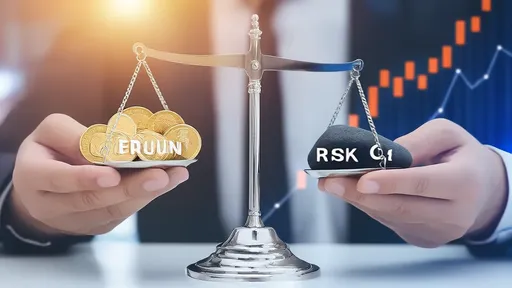
Ultimately, the question of whether Korea's market adjustment represents opportunity or risk lacks a universal answer. The reality is that it presents both, in measures that vary according to individual investment objectives, risk appetites, and time horizons. What appears as risk to one investor may represent opportunity to another. The current environment demands careful analysis, disciplined execution, and ongoing monitoring of developments across economic, corporate, and geopolitical spheres.


As global markets continue to navigate uncertain waters, South Korean equities remain a compelling subject for international investors. The nation's fundamental strengths—technological prowess, manufacturing excellence, and educated workforce—continue to provide solid foundations for long-term growth. However, the path forward likely contains both triumphs and tribulations, requiring investors to maintain both conviction and flexibility in their approaches. The coming months will reveal whether current market adjustments represent a temporary storm to be weathered or a fundamental shift requiring strategic reconsideration.



Recommend Posts
Finance

Accelerated Issuance of Local Government Special Purpose Bonds: Impacts

By /Aug 28, 2025

The recent acceleration in local government special bond issuance across China has sent ripples through financial markets and economic planning circles. This strategic move, coming at a critical juncture in the economic calendar, reflects a deliberate push to bolster infrastructure investment and stimulate regional development. Market analysts have been closely monitoring the pace and scale of these issuances, noting a significant uptick compared to previous quarters.
Finance

Credit Spreads Narrow to Low Levels, Are Corporate Bonds Still Worth Buying?

By /Aug 28, 2025

The financial markets are whispering a curious tale these days, one told through the narrowing spreads of corporate credit. For seasoned investors and newcomers alike, this compression of yields relative to risk-free benchmarks presents a fundamental and pressing question: in this environment, do corporate bonds still hold their allure as a worthwhile investment?
Finance

Investment Opportunities in Carbon Emission Trading

By /Aug 28, 2025

The global carbon market is quietly undergoing a transformation that few investors have fully grasped. While headlines focus on renewable energy stocks and electric vehicle manufacturers, a more nuanced opportunity is emerging in the complex ecosystem of carbon emissions trading. What began as a compliance mechanism for heavy polluters has evolved into a sophisticated financial market where carbon credits have become a new asset class with unique characteristics.
Finance

Bonds vs. Stocks: Which is More Attractive in the Current Environment?

By /Aug 28, 2025

The perennial debate between bonds and equities has taken on renewed urgency in today's complex financial landscape. As markets navigate a labyrinth of inflationary pressures, shifting central bank policies, and geopolitical uncertainties, investors find themselves at a crossroads, weighing the relative merits of these two foundational asset classes. The question of which holds greater appeal is not merely academic—it strikes at the heart of portfolio construction and risk management in an era of heightened volatility.
Finance

China's AI+" Action Opinion Released, Which Sectors Benefit?

By /Aug 28, 2025

China's recent unveiling of its comprehensive "AI Plus" initiative has sent ripples across global markets, with analysts and investors scrambling to identify the sectors poised for the most significant transformation and growth. This ambitious policy directive aims to deeply integrate artificial intelligence with the real economy, fostering a new wave of technological innovation and industrial upgrading. The move is widely seen as a strategic effort to secure a dominant position in the global AI race, and its implications extend far beyond the technology sector itself, promising to reshape the very fabric of the nation's economic landscape.
Finance

Striking a Balance: Multi-Asset Allocation Strategies in the Post-Rate Cut Era

By /Aug 28, 2025

As central banks worldwide pivot toward monetary easing, investors find themselves navigating a fundamentally altered landscape where traditional portfolio strategies demand recalibration. The post-rate-cut era presents both unprecedented opportunities and concealed pitfalls across asset classes, requiring a sophisticated approach to balance offensive positioning with defensive resilience.
Finance

South Korean Stock Market Adjustment: Opportunity or Risk?

By /Aug 28, 2025

The recent turbulence in South Korea's equity markets has sent ripples through global investment circles, presenting a complex tableau of both promise and peril. As the KOSPI and KOSDAQ indices experience notable adjustments after a prolonged period of growth, international investors find themselves at a crossroads, weighing the potential for substantial returns against the backdrop of heightened volatility and macroeconomic uncertainties.
Finance

Behind the Tech Stock Sell-off: A Correction or a Turning Point?

By /Aug 28, 2025

The recent sell-off in technology stocks has sent ripples across global markets, leaving investors grappling with a critical question: is this merely a healthy correction after years of unprecedented gains, or the beginning of a more profound market shift? The sharp declines, particularly in high-flying names that have been market darlings, have triggered a wave of analysis and speculation about the future trajectory of the tech sector and the broader market.
Finance

The Economic Implications Behind the Rising 'Gold-Copper Ratio'"

By /Aug 28, 2025

The financial markets have been whispering a curious tale in recent months, a story told not through headlines or earnings reports, but through the relative performance of two seemingly mundane commodities: gold and copper. This relationship, known as the gold-to-copper ratio, has been climbing steadily, and for seasoned market watchers, its ascent is more than just a data point on a chart; it is a potent signal flashing amber, if not red, for the global economic outlook.
Finance

Bear Steepening" in China's Bond Yield Curve: Where Are the Opportunities?

By /Aug 28, 2025

The recent steepening of the China Government Bond yield curve, characterized by rising long-term yields and relatively stable short-term rates, has captured significant attention among fixed-income investors and market strategists. This phenomenon, commonly referred to as a "bear steepener," typically emerges during periods of shifting monetary policy expectations, improving economic growth prospects, or mounting inflation concerns. In the context of China's current macroeconomic landscape, this yield curve dynamic presents a nuanced set of opportunities and challenges that demand careful analysis and strategic positioning.
Finance

Global 'Dumping US for Asia' Capital Flows Reveal New Investment Logic"

By /Aug 28, 2025

In the intricate tapestry of global finance, a subtle yet profound shift is underway, one that challenges long-held assumptions and redefines the very logic of international investment. The phenomenon of capital increasingly flowing away from traditional American markets toward dynamic Asian economies is not merely a cyclical trend but a structural realignment with far-reaching implications. This movement, often encapsulated in the phrase "abandoning America for Asia," reveals a new investment paradigm shaped by geopolitical recalibrations, technological ascendancies, and evolving risk appetites.
Finance

Has the Super Cycle of Commodities Come to an End?

By /Aug 28, 2025

The global commodities landscape is once again at a pivotal crossroads, with investors, policymakers, and industry leaders grappling with a fundamental question: has the latest supercycle reached its conclusion? The roaring rally that characterized post-pandemic markets—driven by supply chain disruptions, unprecedented fiscal stimulus, and a robust recovery in demand—appears to have lost momentum. Yet, declaring the end of this cycle may be premature. Structural shifts in energy transition, geopolitical realignments, and persistent inflationary pressures suggest that we may be witnessing not an endpoint, but an evolution.
Finance

Bank Deposits Shift to Stock Market, Changing the Market Landscape"

By /Aug 28, 2025

In a quiet but unmistakable shift, the financial landscape is being reshaped by a phenomenon some analysts are calling the "great deposit migration." Household savings, long nestled in the safety of bank accounts, are increasingly finding their way into the bustling equity markets. This movement of capital is not merely a statistical blip; it represents a profound change in investor psychology and risk appetite, with the potential to alter market dynamics for years to come.
Finance

Gold Heading for $3,600? The Logic Behind UBS's Bullish Outlook

By /Aug 28, 2025

Gold’s recent surge toward the $3,600 mark has captured the attention of investors and analysts worldwide, with UBS emerging as one of the most vocal proponents of this bullish outlook. The Swiss financial giant’s optimism isn’t born out of mere speculation; rather, it’s grounded in a series of interconnected macroeconomic and geopolitical factors that have converged to create a potentially explosive environment for the precious metal.
Finance

Investment Opportunities and Challenges in the Global Automotive Industry's Electric Transformation

By /Aug 28, 2025

The global automotive industry stands at the precipice of its most significant transformation in over a century. As nations tighten emissions regulations and consumer preferences pivot toward sustainability, the race toward vehicle electrification has accelerated from a strategic priority to an existential imperative. Automakers worldwide are pouring unprecedented capital into retooling factories, developing new electric vehicle (EV) platforms, and securing supply chains for critical components like batteries and semiconductors. This seismic shift is not merely about replacing the internal combustion engine; it represents a fundamental reimagining of the automobile as a software-defined, connected, and intelligent device. For investors, this landscape presents a complex tapestry of monumental opportunities intertwined with formidable challenges, demanding a nuanced understanding of technology, geopolitics, and market dynamics.
Finance

Enhancing Portfolio Anti-Fragility" Amid Rising Geopolitical Risks

By /Aug 28, 2025

In an era where geopolitical tremors ripple across global markets with increasing frequency, the concept of building antifragile investment portfolios has transitioned from theoretical curiosity to practical necessity. Unlike traditional diversification strategies that merely seek to withstand shocks, antifragility aims to thrive on volatility and chaos. The current landscape—marked by trade tensions, regional conflicts, and resource nationalism—demands a paradigm shift in how investors approach risk. It is no longer sufficient to be robust; one must position assets to gain from disorder.
Finance

Nvidia Earnings Preview: China Market as a Key Variable

By /Aug 28, 2025

As Nvidia prepares to release its quarterly earnings report, industry analysts and investors are closely monitoring one critical factor that could significantly influence the chipmaker's performance: its exposure to the Chinese market. The company's financial health appears increasingly tethered to geopolitical winds and regulatory shifts emanating from Beijing and Washington, creating a complex landscape for one of the world's most valuable technology firms.
Finance

Balancing Risk and Return in High-Yield Corporate Bonds

By /Aug 28, 2025

In the intricate tapestry of fixed-income markets, high-yield corporate bonds stand as one of the most compelling, yet often misunderstood, instruments. Often dubbed "junk bonds," these securities are issued by companies that do not qualify for investment-grade ratings from agencies like Moody's or Standard & Poor's. The very label "junk" carries a pejorative connotation, suggesting an asset class mired in unacceptable risk. However, for the discerning investor, the high-yield sector represents not a junkyard of discarded opportunities, but a dynamic marketplace where calculated risks can be met with substantial rewards. The entire investment thesis for this arena hinges on a delicate and perpetual balancing act between the potent allure of high income and the very real possibility of capital loss.
Finance

RMB Exchange Rate Stabilizes and Rises, Enhancing Asset Attractiveness

By /Aug 28, 2025

The Chinese yuan has been demonstrating remarkable resilience in global currency markets, with its exchange rate exhibiting a steady appreciation trend that has caught the attention of international investors and economists alike. This gradual strengthening reflects not only China's robust economic fundamentals but also growing confidence in the nation's financial markets and long-term growth prospects.
Finance

Copper Price Trend: A Barometer of the Global Economy

By /Aug 28, 2025

Copper, often dubbed Dr. Copper for its PhD-like ability to forecast economic health, has long served as a barometer for global industrial demand and financial sentiment. Its price movements are scrutinized by economists, traders, and policymakers alike, offering a real-time glimpse into the underlying currents of the world economy. Unlike many commodities driven primarily by supply shocks or speculative fervor, copper’s demand is deeply intertwined with industrial activity, infrastructure development, and technological advancement. As such, its trajectory often reveals more about economic realities than headline GDP figures or central bank pronouncements.