Paths to Enhancing First Aid Skill Popularization

Jul 14, 2025 By

The global healthcare landscape has witnessed a growing recognition of the critical role that first aid skills play in saving lives during emergencies. From sudden cardiac arrests to traumatic injuries, the minutes before professional medical help arrives often determine survival outcomes. Yet, despite this understanding, first aid literacy remains unevenly distributed across populations, with socioeconomic factors creating stark disparities in access to training.

Urban centers have become laboratories for innovative first aid education models, where public-private partnerships are breaking traditional barriers. Cities like Copenhagen and Singapore have integrated mandatory first aid modules into driver's license programs, while Tokyo has transformed its subway stations into pop-up training hubs during rush hours. These approaches recognize that modern lifestyles require equally modern solutions - meeting people where they spend their time rather than expecting them to seek out conventional classroom courses.

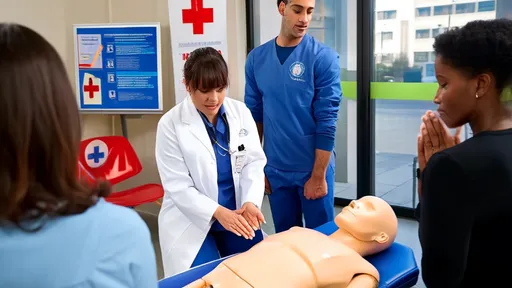
The digital revolution has ushered in unexpected opportunities for skill dissemination. Virtual reality applications now allow users to practice CPR on hyper-realistic avatars, while mobile gaming platforms have successfully gamified the learning process. What's particularly striking is how these technologies have demonstrated retention rates surpassing traditional methods. When the American Red Cross introduced their augmented reality first aid simulator, participants showed 40% better recall after six months compared to those trained through video instruction alone.

Workplace policies are gradually shifting from passive compliance to active empowerment. Forward-thinking corporations have moved beyond simply stocking first aid kits to implementing "train-the-trainer" programs that create internal networks of certified responders. The ripple effects are measurable - companies reporting such initiatives see workplace injury fatality rates drop by as much as 35%. This paradigm shift reflects an understanding that safety isn't just about equipment, but about cultivating human capital with the confidence to intervene effectively.

Educational systems present both challenges and tremendous potential for creating generational change. Scandinavian countries have demonstrated the long-term impact of incorporating first aid into national school curricula, with Norway achieving near-universal youth competency. However, resource limitations in developing nations have sparked creative alternatives, such as Zambia's "First Aid Scouts" program that trains teenage volunteers as community instructors. These adolescents then conduct neighborhood workshops using locally adapted materials, proving that cultural relevance can outweigh budgetary constraints.

The psychological dimension of first aid education often goes underappreciated. Studies reveal that even when individuals possess theoretical knowledge, many hesitate to act during actual emergencies due to fear of causing harm. Innovative programs are now addressing this through stress inoculation training, where participants practice skills in increasingly chaotic simulated environments. By exposing learners to realistic stressors - loud noises, flashing lights, and even actors portraying distraught bystanders - these programs build the mental resilience needed to perform under pressure.

Community-based initiatives are rewriting the playbook for reaching vulnerable populations. In Rio de Janeiro's favelas, local NGOs have trained resident volunteers as first responders who can navigate complex alleyways faster than ambulances. Similarly, Chicago's barbershop first aid program has turned neighborhood grooming establishments into unexpected hubs of health education. These hyper-local approaches succeed by leveraging existing social networks and trust relationships that formal institutions often struggle to establish.

Measuring true proficiency rather than mere certification poses an ongoing challenge to quality assurance in first aid education. The traditional model of issuing cards after a four-hour workshop fails to account for skill degradation over time. Some European countries have implemented mandatory biennial reassessments with practical testing, while insurance companies in Japan offer premium discounts to policyholders who maintain current certifications. Such accountability mechanisms point toward a future where first aid competence becomes an ongoing practice rather than a one-time achievement.

The economic argument for widespread first aid literacy is gaining traction among policymakers. The World Health Organization estimates that every dollar invested in community first responder programs yields a $14 return through reduced healthcare costs and preserved productivity. This calculus becomes even more compelling in aging societies, where falls and other domestic accidents create enormous burdens on emergency systems. Some national health services are now piloting "first aid tele-guidance" programs that allow dispatchers to talk untrained bystanders through life-saving procedures while help arrives.

Technological democratization continues to reshape access patterns in surprising ways. In rural India, smartphone-based micro-training modules delivered via WhatsApp have reached populations previously considered unreachable. These 90-second instructional clips, optimized for low-bandwidth environments, have trained over two million users in basic hemorrhage control. Meanwhile, Australian researchers have developed self-disinfecting training manikins that address hygiene concerns in resource-limited settings, removing yet another barrier to hands-on practice.

The future of first aid education likely lies in personalized learning ecosystems. Artificial intelligence platforms can now assess individual knowledge gaps and deliver customized refresher content, while wearable devices enable real-time feedback during practice sessions. This convergence of pedagogy and technology promises to create maintenance pathways that keep skills sharp between formal recertifications. As these systems mature, we may see the emergence of dynamic credentialing - where demonstrated competency, rather than time spent in class, becomes the true measure of readiness.

Cultural narratives around first aid require equal attention to structural solutions. Media representations often portray medical emergencies as resolved exclusively by professionals, inadvertently reinforcing public passivity. Public health campaigns in several countries have begun collaborating with television producers to model effective bystander intervention in popular programming. When a prime-time medical drama in South Korea incorporated a realistic subway rescue sequence, calls to first aid training centers increased sevenfold the following week.

The COVID-19 pandemic unexpectedly advanced certain aspects of first aid education while hindering others. Lockdowns accelerated the adoption of virtual training platforms, but also disrupted hands-on practice opportunities. In the aftermath, hybrid learning models have emerged as a promising middle ground - combining online theory modules with concentrated in-person skill sessions. This evolution suggests that the path to universal first aid literacy won't require choosing between technological convenience and practical mastery, but rather intelligently combining both.

Ultimately, achieving meaningful first aid penetration across populations demands moving beyond awareness campaigns to creating durable behavioral change. This requires recognizing that skills are perishable, confidence is situational, and true preparedness comes from repeated, realistic practice. The most successful programs will be those that treat first aid not as a discrete skill set, but as an integral component of community resilience - as fundamental to modern citizenship as literacy or numeracy.

Recommend Posts
Health

Regulations for the Circulation of Electronic Prescriptions

By /Jul 14, 2025

The digital transformation of healthcare has brought about significant changes in how medical prescriptions are managed and processed. Among these advancements, the standardization of electronic prescription (e-prescription) circulation has emerged as a critical component in ensuring efficiency, accuracy, and security in the healthcare ecosystem. As countries worldwide adopt digital health solutions, the need for a unified framework governing e-prescription circulation becomes increasingly apparent.
Health

Standards for Interpreting Genomic Data

By /Jul 14, 2025

The interpretation of genomic data has become a cornerstone of modern biomedical research, clinical diagnostics, and personalized medicine. As sequencing technologies advance and costs decline, the volume of genomic information available to researchers and clinicians has grown exponentially. However, the sheer complexity of this data presents significant challenges in establishing standardized interpretation frameworks that ensure accuracy, consistency, and clinical relevance.
Health

Construction of Medical Resource Sharing Platform

By /Jul 14, 2025

The concept of a healthcare resource-sharing platform has gained significant traction in recent years as governments, hospitals, and private organizations seek innovative ways to optimize medical services. These platforms aim to bridge gaps in healthcare accessibility, reduce inefficiencies, and improve patient outcomes by enabling seamless collaboration among stakeholders. The push for such systems has been further accelerated by the global pandemic, which exposed critical weaknesses in traditional healthcare infrastructure.
Health

Collaborative Mechanism of Tiered Medical Treatment

By /Jul 14, 2025

The concept of tiered healthcare delivery has gained significant traction in recent years as nations grapple with the dual challenges of rising medical costs and uneven access to quality care. At its core, this approach seeks to create a seamless patient journey through different levels of care, from primary physicians to specialized hospitals, with each tier functioning not in isolation but as interconnected components of a larger health ecosystem.
Health

Guidelines for Adjusting Nutritional Needs with Altitude Changes

By /Jul 14, 2025

As adventurers and athletes increasingly explore high-altitude environments, understanding how nutritional needs shift with elevation becomes critical. The human body undergoes significant physiological changes when exposed to reduced oxygen levels, colder temperatures, and increased ultraviolet radiation. These changes demand careful adjustments in dietary intake to maintain energy, performance, and overall health. Whether you're a mountaineer, a trekker, or someone relocating to a high-altitude region, adapting your nutrition can make the difference between thriving and struggling.
Health

Anti-Inflammatory Diet Ingredient Combination Formula (2025 Edition)

By /Jul 14, 2025

The concept of anti-inflammatory eating has evolved significantly over the past decade, and the 2025 edition of dietary guidelines brings a fresh perspective on how to harness food as medicine. Unlike restrictive diets of the past, the new approach emphasizes flexibility, flavor, and sustainability while targeting chronic inflammation at its root. Researchers now understand that inflammation isn’t just about single "superfoods" but rather the symphony of nutrients working together across meals.
Health

Standardized Curriculum for Health Education

By /Jul 14, 2025

The standardization of health education curricula has emerged as a critical factor in shaping effective public health interventions worldwide. As societies grapple with evolving health challenges, the need for structured, evidence-based health education programs becomes increasingly apparent. These standardized courses serve as the backbone for equipping individuals with essential knowledge and skills to make informed decisions about their well-being.
Health

Quantitative Association between Food Processing Degree and Chronic Disease Risk

By /Jul 14, 2025

The relationship between food processing and chronic disease risk has emerged as a critical area of scientific inquiry in recent years. As global dietary patterns shift toward convenience and shelf-stable products, researchers are uncovering troubling associations between the degree of food processing and long-term health outcomes. This complex interplay between modern food production methods and human biology raises fundamental questions about how industrialization of our food supply may be quietly reshaping population health trajectories.
Health

Mechanisms by Which Gut Metabolites Influence Brain Health

By /Jul 14, 2025

The intricate relationship between gut metabolites and brain health has emerged as one of the most fascinating frontiers in modern medical research. Scientists are increasingly uncovering how the byproducts of our gut microbiota—tiny molecules produced during digestion—can influence cognitive function, mood, and even the risk of neurodegenerative diseases. This bidirectional communication, often referred to as the gut-brain axis, is reshaping our understanding of mental and neurological health.
Health

Nutrient Retention Rate Comparison of Different Cooking Appliances

By /Jul 14, 2025

In the realm of modern cooking, the choice of kitchen appliances extends far beyond convenience and speed. Increasingly, health-conscious consumers are scrutinizing how different cooking methods affect the nutritional value of their meals. The debate over which cooking tool best preserves vitamins, minerals, and other essential nutrients has sparked considerable research—and some surprising revelations.
Health

Paths to Enhancing First Aid Skill Popularization

By /Jul 14, 2025

The global healthcare landscape has witnessed a growing recognition of the critical role that first aid skills play in saving lives during emergencies. From sudden cardiac arrests to traumatic injuries, the minutes before professional medical help arrives often determine survival outcomes. Yet, despite this understanding, first aid literacy remains unevenly distributed across populations, with socioeconomic factors creating stark disparities in access to training.
Health

Medical Quality Evaluation Indicator System

By /Jul 14, 2025

The evaluation of healthcare quality has become a cornerstone in modern medical systems, shaping policies, patient outcomes, and institutional accountability. As healthcare systems worldwide strive for excellence, the development and implementation of robust healthcare quality evaluation indicator systems have gained prominence. These frameworks serve as vital tools for measuring performance, identifying gaps, and driving continuous improvement in patient care.
Health

Recent Discoveries on the Synergistic Effects of Micronutrients

By /Jul 14, 2025

The intricate dance of micronutrients within the human body has long fascinated researchers, but recent breakthroughs have unveiled a far more complex choreography than previously imagined. What was once viewed as a collection of individual nutrients working in isolation is now understood to be a sophisticated network of synergistic relationships that fundamentally alter our approach to nutrition and health.
Health

Community Model for Chronic Disease Management

By /Jul 14, 2025

The concept of chronic disease management within community settings has gained significant traction in recent years as healthcare systems worldwide grapple with the rising burden of non-communicable diseases. Unlike traditional hospital-centric models, community-based approaches emphasize localized care, patient empowerment, and long-term sustainability. These models recognize that managing conditions like diabetes, hypertension, and cardiovascular diseases requires more than episodic clinical interventions—it demands continuous engagement within the environments where people live and work.
Health

Mechanism for the Integration of Rehabilitation Medicine

By /Jul 14, 2025

The seamless transition between acute care and rehabilitation services remains one of the most critical yet often overlooked aspects of modern healthcare systems. As populations age and chronic conditions become more prevalent, the need for effective rehabilitation care coordination has never been greater. Yet despite its importance, many patients still fall through the cracks during this vulnerable period of recovery.
Health

Technical Grading of Medical Robots

By /Jul 14, 2025

The evolution of medical robotics has ushered in a new era of precision, efficiency, and safety in healthcare. These sophisticated machines are no longer confined to the realms of science fiction but have become indispensable tools in modern medicine. As the technology matures, it has become increasingly important to classify medical robots based on their technical capabilities, applications, and levels of autonomy. Understanding these gradations is critical for healthcare providers, policymakers, and manufacturers alike, as it informs decision-making regarding adoption, regulation, and further innovation.
Health

Optimizing Eating Window: Strategies for Time Nutrition

By /Jul 14, 2025

In recent years, the field of chrononutrition has gained significant attention for its focus on how the timing of meals influences metabolic health. Unlike traditional dietary approaches that emphasize what to eat, chrononutrition explores when to eat, aligning food intake with the body's internal clock. This emerging science suggests that optimizing eating windows can enhance weight management, improve energy levels, and reduce the risk of chronic diseases.
Health

Family Doctor Contracted Services Content

By /Jul 14, 2025

The concept of family doctor contracting services has gained significant traction in recent years as healthcare systems worldwide strive to provide more personalized and continuous care. This model, which emphasizes long-term relationships between patients and their primary care physicians, is designed to improve health outcomes while reducing unnecessary hospital visits. At its core, the service revolves around a contractual agreement where a family doctor becomes the first point of contact for a patient’s medical needs, offering comprehensive care that spans prevention, diagnosis, treatment, and follow-up.
Health

Construction of Rare Disease Diagnosis and Treatment Network

By /Jul 14, 2025

The establishment of robust rare disease diagnosis and treatment networks has emerged as a critical priority in global healthcare systems. As nations grapple with the complexities of identifying and managing these often-overlooked conditions, collaborative frameworks are proving indispensable. These networks represent more than just medical infrastructure—they embody a fundamental shift in how societies address health inequities for vulnerable patient populations.
Health

Anonymous Data Processing for Health Big Data

By /Jul 14, 2025

The rapid advancement of digital health technologies has ushered in an era where vast amounts of health data are generated daily. From electronic health records to wearable devices, the healthcare industry is swimming in data that holds immense potential for improving patient outcomes and advancing medical research. However, this treasure trove of information comes with significant privacy concerns, making anonymization a critical process in the responsible handling of health data.